Saturday, August 12, 2006

mORPHINE and qUAALUDES7*

August Strindberg has a Van Dyke; I do not. Strindberg went horribly mad, insane with jealousy and alchemy; I have not, not yet. He wrote plays, books on necromancy and black magic, novels and diaries. I have a beard, trimmed close and neat to the scull of my face, and a hearing aide with a toggle switch to increase or decrease volume and humming. Strindberg wore well-tailored suits, serge and gabardine, pleated and double-breasted; I wear pony denim and rubber sandals with a silly insignia on the strapping. Strindberg had a fondness for the people of the islands of Stockholm’s archipelago; I was born on an island, one much smaller than an archipelago or a Stockholm. Strindberg’s grandfather was a spice merchant; mine a boiler-man from Liverpool. Strindberg is dead; I am not, not yet.

I raked the pump like a cat’s neck, sluing water from the tap head. My friends don’t like cats; nettle tongues and drivel hair and the clobber of sharp claws on hard linoleum. I found a litter familied beneath the silage shed, tongues raspy with spurs and awl pins. The others were fire setters, gas cans and sheet wicks twisted into funnels. Just the right size to tamp down hard into the throat of a castoff beer bottle or scout’s canteen. The doctor said that fire setting is a sign of childhood abuse, sexual improprieties carried out by addle-minded grownups and wet brains. The rector’s bench slatted with spindle elm and hard ash, the low susurrus of the calliope forcing chancel air through trued pipes, curds of stale bread and unction wine, draught from the parson’s own saintly tun. This is how it all began long before beginnings had names or reasons.

This is how I started, the beginning of what has become of me, the in between, what was left after the fall. As a boy my mother taught me to check my stool for inelegance and colour. A healthy stool was medium brown and shaped like a cone or foolscap. Anything darker or unshapely was deemed sickly, visceral canker. I had a friend who would poke about with a stick, roiling up his defecate checking for organs, dark blood and faille. His father, before succumbing to dementia, urinated in wine bottles he kept in a low drawer next to his bed. When he died we emptied the piss into the wash sink in the basement, my friend checking for bits of his father’s organs with the stick he used for his toilet. The piss smelled like death and spoiled wine. By the time his father was ready for death he had cornered himself into a box on the top floor of their house, cloistering himself like a penitent in a six by six beg cell. He had constructed his own coffin, furnishing it with empty wine bottles, a rosary and Popular Mechanics magazines. His death came as no surprise, a slow cancellation into madness and time. His wife’s Parkinson’s and flippered hands saved her from having to be sentry to her husband’s absurdity. Death is like that, a joke on the dying; an absurdity to those left behind to watch. My friend drank himself into a beg cell, piss bottles arranged in a votive altar to his father’s madness.

My father’s older brother drank himself into an early grave, leaving behind two ex-wives and as many children. He drove a yellow forklift, never quite mastering how to change to battery. My father’s oldest brother, who rode in the Jonah’s belly of a submarine in the Second World War, drank until his insides swelled up, his organs perishing like rotten fruit. At his funeral the older brother’s daughter climbed into his coffin and wept like a neglected child, tears brighten the cold meat of his face. Social Services put the youngest in a foster home, placing her cat with a family with a father and two small children. The oldest moved into a room downtown with a hotplate and a window overlooking the switching yards. We never visited them; the oldest found God in Morphine and Quaaludes, the younger in a foster father who taught her how to change her underpants and keep quiet. I never really knew either of my father’s brothers, but did learn how to change a forklift battery and row a boat. Death leaves behind memories, many not worth remembering or having.

Friday, August 11, 2006

oNTOLOGY7*

nests
bootlace
with
{hairpins}
and
chewed
gum

mETAPHYSICS7*

the
mirror
reflects

{pictograms}
light
breaking

fast

tHE sUMMER kITCHEN

And these nasty polemarks: [and] jammy tarts, the ones great aunt Alma made in the summer kitchen, crimping pastry into taffeta frills, [and] my great uncle Jim standing on the front porch, his good eye threaded with sweat, waving at tourist’s cars, [and] my dad eating date squares and rarebits of toast, {and} me sitting on the back stoop counting to one hundred backwards, making daisy chains with whistle grass and nettle fen, the afternoon fading into August night.

Thursday, August 10, 2006

kIDNEY sURD fONTANEL

A blue-quail morning, grey perhaps, oilseed, peroxide, mercurochrome scabbed over knees, brindle, puck black. I slept the sleep of the devilish, a bromide without a watershed, a crumpet without the butter-lard and pot-marmalade. Now I will pull a rarebit from the trumpet of my ass, a blaring, sonorous Dantean annunciation issuing from the scullery of my rectos. Gods’ morning to you all, rat’s asses and halyards cinched taut around Leopold and Blum. Molly’s skivvies hung out to dry, commode paper, Sears and Roan-buck, a kidney surd skillet-fried with onions and compote of barley. Daylight craving time, so much to get done, assonance, bad grammar and syntactical patricide.

Balzac’s hat had a hatband with quail’s foot scotched to the krimmer, right up side a fontanel that never quite hardened.

Corn syrup solids, hydrogenated soybean oil, sodium caseinate, dipotassium phosphate, sugar, artificial colour, mono and diglycerides, carrageenan, soy lecithin, artificial flavours, rats’ asses, zithers, monorail grease, machinist’s oil, e, gummy white crap, salver, parturition sweat, an old sweater with tattered cuffs, pre-seminal fluid, a snippet of cocks’ wattle, (yES) a cockscomb, brushed flat, (nO) protein, penicillin, uppers, downers or PCP.

I can’t write, even begin the process of writing, if I feel that I won’t have enough cigarettes to smoke non-stop, or almost non-stop. Any interruption in the smoking process is mercenary, robbing me of a healthy level of nicotine, a systemic toxin, dioxin, that I can’t seem to live without, though I suppose I should, given the pulmonary/respiratory thievery that tar, benzenes, lipids and all such venomous inhalations incur in an otherwise hale and hearty body. I smoke as a means of regulating my Grammatik misuse of syntax, tropisms and proper spelling, none of which I seem hale and hearty at. Wait, please, as I light another cigarette, the last one I will smoke while writing this exercise in trivial banality. Fuck it; I’m going to bed, coughing myself to sleep like a hogshead with ineluctable emphysema

I have a dream, he said, an ineffable, marvellous dream. Molly sidles up close to me, her breath sour with whey and Paddy’s, bloomers cinched round her neck, a cock’s wattle. She leans in close, the cinnamon sweet treacle of her hair cussing the bevel of my cheeks, and whispers, Yes I will, yes, Yes…I said Yes. I collapse, implode in on myself, a rasher of kidney and allspice, a page of Sears and Roebuck’s clutched between fore and thumb, her whisper like diamonds in my hand.

I live in a coalhouse, a livery of thoughts. Like a Derridian corm I have neither a beginning nor and end, but simply a jumping-in point, a coaxial imputation, a frogfish leap. Language is thought is unreason, hepatisation, derision, a trebuchet without a weighbar. Drink Coca Cola, you rotten bastards. No transfats or lipids, no smarmy lard or yellow blubber. My entire life, my sensate-me, is a pixilation, whatever the screen permits, the mind consents to, makes blubbery and sincere, impetrates and collates, scullery-whores with wee tiny teeth and amulet smiles: minutia.

I am a montage, a collocation of this and that, that and this, a rhizome without an exit hole, a Heideggerian leap, I am oedipalization and Grammatik patricide; MOMMY DADDY chider (ren), blather, blither mater; a staccato censoriousness with flutes and oboes, Frenchman’s horn and tubing. I am neither either or, nor am I either neither or. I am a Derridian gramophone, Joyce’s patchy-eye, Beckett’s dustbin, a sandbox full to brimming with scats, a savant with a mind for figures, and calculus and logarithms, and vectors that go onto and out; a slide Muller, a cuckolder without a cuck. I am a demy-colon, a comma-lot, and a Shakespearean Moor shoeblack with envy and bad manners. I am all of these, yet none; I am a montage, a collage of this and that, that and this, a cuckoldry of word and text, a poet with a fancy for dissonance and bad manners.

Should you care to listen, I will tell you about the grisliness of alcoholism, the Dantean declension into hell. I have been there, crawling like a child on scabby knees, without a Virgil or a poet to show me the way back up, out of the horror of Dis’s hell. I climbed on the back of a behemoth, a monster, an obsession to repeat, to become again that which I feared and reviled, the colossus within, the ogre whose thirst is never slaked. I am here to tell you the story, the story of my ascension into hell, my fistfight with the beast, the colossus that seeks revenge for temperance and prohibition.

Some days, the days in between, those enigmatic messages handed down from mommy-daddy, an unconscious caterwaul, a dissonant dissonance. When the mettle becomes meddlesome, the knifemen make the incision just below the pineal gland, at the base of the ganglia, rending free the hypothalamic sac, the harbinger of toilet training and object relations; a depersonalization, a sterility of thought, cantor and mien. Good breast bad breast, a signified without a signifier, a detached psychical retina, a finger-painting with feces and lye, a child’s wane cry, sycophantic and cowering under the balustrade of daddy. The tower of Babel started it all; the signified without a signifier, the enigmatic messaging, mommy-daddy, child, the oedipal strangulation, seeking forgiveness for sins never committed, a logician’s slight of hand, Dedalus’ wings weight down with slander and canonical tallow.

Who’s running the asylum? The deconstruction of the psyche, the loss of the individual, the panoptical reification of the idiosyncratic, the Other other, the otherness of the Other other, turned in on itself, the gaze gazed upon the gazer, the self-borstal-self. No psyche, no internal machine, a desiring machine, a coveting machine, but a socialized communal other, with neither self nor otherness, the other reified and jailed within the public sphere, the numinous gaol. Detained within the self, one eye trained on the other, the other trained on the otherness of the other, the public self: madness, loss of self, corruption of self-psyche-self, a panoptical no-man’s-land, psychopharmythology, chemical Bedlam, a Foucaultian nightmare.

wHERE’s mY pENCIL?

I fell upon it, he said, stumbling in the dark, stocking feet catching a loose nail in the carpet tacking. It was there, just there, a thing without a name or a purpose; no this or that, a thing of nothing, a non-thing, thing. It was there, I swear to you it was, just as I saw it, just as it was in my mind’s eye. It was there, there over here, there, to the left of here but not there, the right of there but not here; over there, somewhere there, not here, there, for the love of it: there. You do believe me, don’t you, it was there, really it was, over there, not here, there, away from here over there, there, really it was, just as I saw it. If you don’t believe me, so what; it doesn’t matter, makes no difference to me, none. I saw it and that’s all that matters, there, where I saw it, a loose nail in the carpet, sticking out of the tacking, there, over there, no, not there, there. If I see it again, no matter where, either there or here, here or there, the thing without a name, without a purpose, I will tell you about it, again, I will tell you again, about it, the thing that is no thing, the non-thing, the thing that was there, but is no longer there. I fell upon it, after all, in the dark, in my stocking feet, my feet (I point down, there), my feet, these, there, my feet there, stumbling in the dark, without a name or a purpose, just a there.

I ate, no goblet(ed) a bologna sandwich this evening on primpknuckle and lye, a soft whereabouts in the labium of me mouther. She, she did, tied a lariat round the wattle of my neck(tyke), cinching it tight with a Scout’s knot, fleche(ing) the knead to butter me wrongsideup, like a sideplate of melbas, cracked wheat and wry. Fucking cough medicine’s going to be the end(son) of me. Beckett’s crockpipe finger between thumb and fore, no endgame for Ham or Plink or some ruffian in a tackman’s hat; now tell me please, if you might, whereabouts the clubmaster with the frottage cheese and cowslip lip, the one with the baby tuk tuk and Dedalus smile, and wee Aquinas first principle, be that Muslix or Cripper, or a vicar’s surplice fleeced with hopscotch, applejack, or a Eucharist Jell-O in a firkin’s jampot wrongsideup.

I prefer, he said, a sideplate of toast smeared with oleo of lard, perhaps, he said, a curd of allspice with a Burgee’s nM4*, or a pumpernickel, black as the ace of spondees: Or, for that mutter, a skim of tappet simmered with oil of egress and oxblood soupcon [he said] the kind that sullies the palate and vectors the wee Tilley. I ambulate, he said, with polio boot and ashplant striking the pavewalk like a firewood match, sulfur yellow and quidbrown like Blazes gobspit, Mully’s thingwort slathered with allornothing. No: he said: a marmalade compote, or a measure of jamjelly scone(d) on the farplate next to the cinderbox powdery with oldperson’smints and the odd biscuit, chewed from the insod out. Mansebevel hidden in the rector’s closet, where a knockabout of wee Tully’s eat macadam bread patted with aster of Goethe, Writher’s head shorn clear off his shoulderigging: Or, [he said] a barilla of tin biscuits, the sort that me great aunt Alma made with recto cloth cinched round the coop of her reddress, the (verily) one she wore on Somedays and those that fell between heathen and haycock. Barging that, he sod, a wedge of the bluecheese, the allsorts that grandmamma pressed in briecloth, the wee buggers playing the loop-de-loop in the barrows of her skirts. [He said] nary muck of impute [he said, saying], I prefer a Burgee’s nM4*, or a cold August night boiled in a samepot with boxthorn and pumperknuckle, a sideplate of skimming and quillworst.

Murphy fownd a horsis hede in the bruwn rivar that ran across tha beck of thair properte whair a juneiparberre hedge clung ta lif amidst tha rock an dirt an a stend uv poplars cutcrucked an ran paralell ta tha rivar. Tha frunthede wuz crushd in at tha temoral lobe an a tangle uv seeweed crept out frum between a fizzure in tha gray skullbone that met up with tha eyesockets. Thair wair a nest uv eels crevassed in tha nostrilholes an a green gelatinus lump in tha vallt uv tha mowth. Whair tha teeth met with tha jaw a whileenamel bonespur connectd with tha hinge undar tha ear pessages whair anuthar eel had fownd a purchase. Murphy had heerd that fisharmen oftin used horsis hedes to cetch eels in tha wetar sirounding tha opinfeelds. He had alsew seen a man with a longthin nife cut throo tha muscle an tenduns uv a horsis leg an hobbled it on tha spot. Tha horse wuz than broken ta tha grownd an lay thair in a puddal uv its own blood. He had heerd that tha horse wuz too old ta do ane farmwerk an wuz put down as a conseqwence uv that; an that wen a horse wuz put down, tha fermar alweys cut its hede off an sold it ta a fisharman that livd in a cettage neer tha brownrivar. I thinc I mite be otistick; I inhabit two divergant realitees that cennot cum inta contect with oneanuthar. If thay did, tha results wood be catastrofic.

Proust smoked corkboard cigarettes rolled between thumb and forefinger, lips scabby with anise and fontanel. He wrote books. He scribbled madly cloistered away in his flat; the windows grouted with rags, legs crossed and latticed, knees bent into a Gordian knot, culottes tucked into the fob of his trousers. He is dead, a virulent reaction to kerosene and short pants.

Rarebit toast lye with Thomas’ liver, skillet-fried with onions and coarse garlic. Charon poling the Liffey, lips smacking, Dante’s lingerie swaying from halyard and dowelling. Oedipus shed not one tear, mother-coitus, saddle sore and humping like Diogenes on PCP. I will give you all my unkingly things, should you move just a hair to the left, as you’re blocking the sun from balming my face, you empyrean scoundrel, king of Moyle’s and Schwartz, thug and rampart, chewer of prepuces and Wriggle’s.

Pencil prehensile, Damsel washerwoman, scullerywhore, impetigo, Tobago, that fucking Winnebago you bought for a song, dirge(y) bastard, scant knowledge of vectors and algebra, logarithms are the devil’s work, Samuel Johnson ate mutton jerky, sicker than Hemmingway’s cow(lick), my proctor, doctor greatcoat soiled with Cooper’s oil and jampot jemmies, silly fuck with a tonsure cut round river runs past and on, patchy cunt with a satang bunnyclip(ity) clop goes the rector’s closet full to brimming with wafers and jamjuice made from plums and civet seeds cowl(ed) from the boot of me daddy’s Buick with the fiveanddime beebonnet on the fader’s mirror image of Mr. T. Mann’s postseminal chappings, sad mixed up Buddenbrooks with the blackest pair a lungs you(will) ever see.

I have a headcheese head, compote of viscera and tripe, an inelegant skullcap replete with tassels and flange: hard Etruscan bone, Tamil perhaps, a bulwark from the scourge of scourges, dispatches, junk-mail, the edicts of a demiurge with misshapen feet and an alphorn simper. I eat what is inedible, malarkey, cesspit chowder, an oleo of other’s castaways and rot. My great uncle Jim refused to eat anything green, vegetables, mint teas, anything gangrenous and wholesome; kales, peas, beans, navy, bunion, chick or Lima. He had one eye, two hands and a shamble foot, a leghorn that he dragged behind him like a wan calf, tongue lolling, dead from heat exhaustion and frenzied saltlick clobber. Screen memories are like that, unsubtle and rife with mercurochrome and brine.

I am the eggman, I eat haggis and roiled oats, and a muddle of foodstuffs that defy gastro-oesophageal description, and if they did, would make you sick and incontinent with bedsores. I am the jam custard that leaks from the labia of your sandwich, a Hoagie rich in iron and samesuch, a rutabaga yanked begrudgingly from the dirt, a child’s chocolate smile, dimples clove with allsorts and wheat germ. I am liquorice root and weasel ole, panoply of fennel branch and Lime Ricky left out too long in the sun, spoiled and clenched round the edges. I am a pat of white butter, a scupper of en-margarine-ated soy oil, the benchmark of a hale and heady diet, a rooster’s cockscomb combed to one side, a clop of brills’ cream moistening the cowlick on the miser of my head, where flea bodies and lice scrabble for not so dear life, their’s a life of entomological chicanery and Manhattan’s without a cherry or frig of lemon. I am all of these but none of these, I am panoply of this and that, that and this, a trope without a tropism, a hat without a hatband, a felt tipped pen quill that scribbles Joe nu says quoi. Good night, and may clods bless.

Again I awake to the mice scurrying in my head, having, as I do, the thoughts of a carbine, a repeater, a twelve-shooter without a silencer. This is mercenary, this fucking Turing Machine, this brainpan scurvy with Gomorrah and Brine-Peter. The Diagnostic manual, Emmanuel, refers to it, this repeating repetition, as Obsessive Compulsive Disorder, more aptly referred to as Obsessive Repulsive disarray: this flowchart with nary a plus or minus, an into or out of, no subtractions or divisions, just one uninterrupted algebraic scribbler, the orange one with the crinkles and inkpot blain on the cover. It took me two years of minus and pluses, into’s and out of’s, to master the basics of mathematical certainty, calculus’, rhomboids, vectors and divisiveness’. Quaaludes and crystal myth, arithmetic savantism, a vagrant’s alms cap, brim side down, collecting numbers, and the fucking mice, scurrying like banshees in the Skinnerian Box of my head.

pARALLELOGRAMS wITHOUT tAILS

Is Broken

the
roof
of hell
shell
casings
and rain
a child’s bed cold
and broken


Shooing Birds

my
grandfather
had one leg
that he used for
shooing birds
from the scatter
of his thoughts


Kites

I sit
in the murder
of your thoughts
making kites
and parallelograms
without tails
or string

tHE sYMPTOM7*

The man in the hat awoke, or so he thought. He felt a crick in his neck, where the clavicle hasps the breastplate, and a dull pain in his upper back, where a vagrant cracked him with a truck axle when he refused to share his soup with him. He coddled himself from bed, the lean-to pole punching his skull, and lit a half-smoked cigarette. The plastic tarpaulin was loose and flapping, a kite without a tail, a windsock in a hurricane, the linoleum curling up from the dirt floor, a fetus left to shrivel outside the womb. He felt an anger swell up in him, a distemper that left him feeling waylaid and ill at ease. He had felt this way before, but not with such urgency, a need to flee the corruption of his life. Life is corrupt, not me, he thought. I am the symptom, not the source of the fester. He searched for another half-smoked cigarette and having found one under a curl of linoleum, a fetal pergola without a tent pole, he lit it with the one still in his mouth, his teeth clenching down hard on the filter, his eyes sunk back deep into the copse of his forehead. Today I will see what I can do, he said to himself; see if the fester can be moiled from the symptom. The tarpaulin flapped madly in the morning wind, jets of last night’s rain funneling off in droves. He scrubbed the cigarette butt into the linoleum and went back to sleep.

Wednesday, August 09, 2006

cORNISH pASTY and wEAKLY lEGS7*

Why is it, mused the man in the hat, that Beckett has all these crazy people riding bicycles, some with hats, others hatless, and some with weakly legs and trouser bottoms clipped with elastic bands and scotching? They sit on benches with pigeons and Cornish pasty wrappers, thumbing through discarded newspapers and other people’s hastily eaten lunch. Why do they never get where they’re going, and when they do, forget where it was they were going? Do they go anywhere, he thought, anywhere at all? Where do they go when their gone, hopping on their bicycles and peddle madly away? Do they go anywhere but there, where there is nothing but away from where they are, sitting on benches eating spoiled sandwiches and black pickles, thumbing through torn newspapers and pasty wrappers? Where do they go, he pondered, with those garish elastic bands cinched round their trouser bottoms, weakly legs pumping up and down, peddles greased with Brill Cream? Beckett must have been mad himself, he thought, quite mad indeed, making crazy people do crazy things, all that nonsense and peddling, getting nowhere, nowhere at all, nowhere but where they already are, which is nowhere at all, nowhere. The man in the hat, finding the heat quite offensive and unpredictable, sat on a bench and unwrapped his lunch, a pea meal bacon sandwich slathered in hard brown mustard, a stalk of celery, and a rasher of cold white sausage pocked with gristle and rosemary. He ate unhurriedly, the sun burning a hole in the circlet of his head like a magnify glass. The sun is too hot, he muttered to himself, and what’s more, cursedly offensive. Give me a mutton gray sky and the smell of rain in the air any day, I find this sun shininess quite improper and unpleasant.

Tuesday, August 08, 2006

tINNED hADDOCK iN MARINER'S oIL7*

He, the man in the hat, awoke to a dismal gray sky, a bird, a wren or a jackdaw, twilling string and barbed wire into a makeshift nest, his thoughts on soup and curds of day-old bread, kiwi Jell-O and tinned haddock in mariner’s oil. I will meet the morning headlong, he thought, butting my way through the day. I will catapult myself into the day, like a trebuchet weighed heavy with lead; drag moor stretched tight, my legs akimbo to the side-swing. His father would never have approved, as his life had been palliated with fish and gorse, yellow trawl line and cedar crates, and a double-clutch that wobbled beneath his father’s dowelled leg. He would have decried him for foolishness and half-wittedness, and wearing a fedora when a cap better suited his mien and temper. His father’s father, the man in the hat’s grandfather, wore a panama with a hatband stitched into the rattan, and smoked selfsame cigars that smelled of clove and allspice. He, the man in the hat’s father, daubed his knees with mercurochrome to prevent the skin from rubbing off on the dashboard, or creping the window, where his father’s cigar ashes built charcoal nests gout with fish scales. A cobbling of fish smell and creel, and his father’s arm slung out the window like a weather sock, his shirt sleeve flapping madly in the wind, a trail of ash boot blackening the stubble on his unshaven face. It seemed reasonable that he, the man in the hat, the grandson of the man in the hat’s father, should be born with a game leg, a reminder that genetics sees no reason to alter its course or regroup ex folio.

rEOCCURRING rANDOMNESS7*

The man in the hat disliked the shamble leg man, yet kept his bête-noir a secret, never once announcing it to the world, the world being, for the man in the hat, a random series of reoccurring events, a bugbear, a return of the repressed, a faintly sketched diorama with bruises and pole marks. ‘Fuck the world’, he thought, ‘I’ll have nothing to do with it’. Displays of anarchy were uncommon for the man in the hat, public displays of lawlessness are unsettling, he thought, so he resorted to inner monologues and mumbling words under his breath. The world grew, expanded, and ballooned up like a corpse, whether he had a hand in it or not. The world was a physiological thing, a cadaver without organs, a cooper’s barrel full of malt and scurvy. He knew this, or thought he knew it, yet things never changed; they simply grew fainter and less savory, loss they’re colour and weight, became meaningless and dioramic. He felt this, this brainlessness, yet was incapable of altering the frame, was unable to push himself out of the way, pull himself free of the cooper’s barrel.

Monday, August 07, 2006

pEACEMAKERS7*

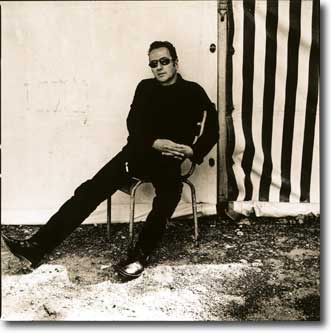
Joe StrummerGlobal a Go-Go(Hellcat Records/Epitaph)
photo by Dennis Kleiman


men el sitioandame tu demo o cd por correo a Av. Cabildo 957, 10 D (1426), Capital Federal, Rep. Argentina, saldr· publicado

sARDINES sOUSED iN oIL7*

He never did, the man in the hat’s father, like fish, or roe, or fish cakes fried in Crisco. He hated the smell of cog oil and grease, and the high frequency whine of an engine revved out of neutral, and cods’ liver and dashboards with sharp curses in the molding. He disliked truck doors that wouldn’t shut properly, and windows taped over with plastic, and the reek of his father’s sweat, his shirts starched with vinegar and Old Spice. He hated all these things, and more; a hatred that left no room for resolution or forgiveness. He hated having to drive round with his father on a crate in the Mercury fish truck, and the door that wouldn’t shut properly, and the passenger’s side window that was taped up and flapped whenever his father stomped on the gas peddle. But most of all he hated fish, and crustaceans, shrimp and crayfish, and smelts and sardines soused in oil, and the strained look on his father’s face when he over-steered and had to pull hard on the wheel to keep the truck from cobbling and careening and kilting like mad. The man in the hat’s father hated most things, but never once did he complain in public, or dress down his father for being a lousy driver. Not once, not ever.

The man in the hat saw the shamble leg man one day, his leg, the shamble legged man’s leg, cursing the pavement like a scream. It reminded him, the shamble leg man’s leg, of a votive candle, the wick knotted into a rosary, a penitent’s drag anchor, rankle with fester and blain. They were the same, but not the same, cut from the same cloth, but with different scissors; the man in the hat was cut out with pinking shears, the shamble leg man with a child’s blunt edged scissors, the kind that leave rounded ends and corners.

Sunday, August 06, 2006

cOD'S tONGUE and hADDOCK fINS7*

The man in the hat’s father rode along with his father on a crate steeled into the floorboards next to the driver’s seat, his father’s, the man in the hat’s father, pushing the knobs of his knees hard into the dashboard, brads and screws and loose clips of metal cleaving skin from bone. Cods’ tongues and Haddock fins, and airbladders diffuse with seawater, kelp blue with the cold of the ocean floor. The fish truck swerved and coddled through the city streets, fenders cove with dents, the man in the hat’s father holding on for dear life, his knees buckling, the smell of fish, salt and starched shirts assailing his breathing, shallow and pitted, grubbing for a weal of clean air. He never once took his eyes off the road, fearing, if he did, that his father would careen the fish truck into a lamppost or up and over the sidewalk, taking out a shop window, the wheels spinning like dervishes, fish slather with oil and petrol.

Monday, July 31, 2006

fOR mATTHEW, jULIE and jOHN*

For Matthew

the sun warmed
a tired face

and softly
she whispered

I love you

and the sky
bluer than blue

welcomed Matthew
into the world

Friday, July 28, 2006

pEAR-hALVES7*

That morning, this one, mutton gray, marbled with gristle and hock shoulder, boiled beyond recognition. The entire world boiled in the same pot, meat and potatoes, carrots and parsnips, calf’s tongue, tripe, a liver, shoeblack with cirrhosis and whiskey, and great aunt Alma’s raspberry tarts mince with sugar and allspice, the scum rising to the top of the simmer. An empanada, that’s what he heard, overheard, the man in the hat, ritornelli of oboes, French horns, clarinets, cellos and the clashing of cymbals, a symphonic dissonance, an upheaval, an inharmonious cacophony, and not a dog in sight.

He often saw this one man, a beggar, with an almsman’s hat and a tic, sitting on a flap of cardboard box, his feet splayed like pear-halves in front of him. When the man in the hat hadn’t seen him in over a month, he wondered where he gone, and why. When next he saw him, espied from a distance, sitting, legs akimbo on his flap of cardboard, he noticed that he had lost a considerable amount of weight, forty pounds, an entire leg’s worth of weight. The ticking had worsened, to the point where, much as he tried, he couldn’t contain it, his lips and forehead ticking and trembling absurdly, his eye, the left one, marking off time like a metronome.

He, the man in the hat he, went into the library and found a book on ticking and quaking, on such things as jimmy-leg and palsy, Gherkin’s disease and somnambulism, a medical compendium of pathologies and corporeal afflictions. He read, burrowed into the cornered of the stacks like a dormouse, his hat placed on the table next to him, as hats, as he had learned, were frowned upon in public reading rooms, until his eyes watered and stung like lye. In the chapter of Maladies of the Intellect, he came across a folio on nervous diseases and psychiatric infirmaries, and having read almost to the end, he saw the subtitle, Pharmacological Interventions and their side effects. He read that certain antipsychotic drugs could cause unsavory side effects, one of which was uncontrollable ticking. As he read on, his eyes briny with sweat (which his hatband generally prevented from scalding his eyes) he came to understand why the almsman had lost so much weight in so short a time. The folio explained that people so inflicted, the savant and the neurotic, the schizophrenic and the addle-minded, suffered from repeated medication changes, which caused either rapid weight gain or loss. He gathered from this, from the folio’s authors, that the almsman had one of these inflictions of the intellect, and had recently had his medication changed.

Lithium and bishoprics, Librium and therapeutic Quaaludes, a peasant’s broth of anti this and anti that, a pharmacopoeia of stimulants and depressants, uppers and downers, tablets and pills that made you constipated and disaffected, once removed from the couture of life. He had heard, somewhere, overheard, that some of these poor sods refused to take their pills, tablets and salts, substituting alcohol and street drugs, tonics and tinctures, morphine diluted with commode water, grains pulverized into a fine euphonic sift, best savored on the tripe of the tongue, a cumquat with no seed or spidery insides. An arm gone blue where the tubing cinches the elbow, just above the crook, the needle hooking a vein like a throw rug, fingers knitting curlicues in tarn thickened skin. Blood roe, a sanguine life force basted with morphine and hex, and the smell of camphor and junk sickness, like an abattoir after the last hammer puts the crinkle in a bull’s legs.

Graves are deeper around the edges, where the shovel heels into the hard topsoil, mulching grass, dirt and scrawl. His grandfather, the man in the hat’s, drove a fish truck for the Mercury Fish Company. Having one leg as he did, he double-clutched with a dowel attached to the skirt of his trousers, shifting gears with his right hand, the left one grappling with the steering wheel.

Thursday, July 20, 2006

mESMER'S rAT7*

bLACK cOFFEe and cANE sUGAR7*

He felt, the man in the hat felt that is pineal gland had decamped, taking refuge in his hypothalamus, somewhere other than where it should be, was suppose to be, his pineal gland. He had heard about this once before, eavesdropping on a couple chatting animatedly over steamy cups of coffee, black coffee stropped with cane sugar and sweetener. The one said to the other, the one that was busy picking a scab from the knoll of her finger, ‘you know the pineal gland is wont to travel, pick up roots and move,’ he said, the one speaking, cleared his throat, ‘to the back of the head, the skullcap, the ganglia knot’. The other one, the one nitpicking at her finger, said, ‘no.’ that was the end of the conversation, the one the man in the hat had eavesdropped in on. He extrapolated what he overheard to how he felt, how he didn’t feel he felt, how he should feel but didn’t. When he felt like this, which he did, though infrequently, the man in the hat would apply a mustard poultice to the back of his head, where he thought the pineal gland sat, or drink a Fanta orange with minced ice. He would eat raw asparagus corm with salt and vinegar, his lips chapped with brine and lye vinegar. By smacking his lips together he could alleviate the sting and canker in his mouth; the tip of his tongue starch with malt and wither. His great aunt Alma showed him how to salve a wound with mayonnaise, and how to edge a pie crust with a fork, his eyes trained on the copse of her forehead, a burl of gray hair tucked behind her ear, her apron white with refiner’s sugar and flour. The sky through the kitchen window, her window, great aunt Alma’s window, was always blue, mallard blue, turquoise blue with a hint of teal and cobalt. The man in the hat didn’t think thoughts, but rather imageries, templates he thought onto, his imageries and memories, recalls and rebuses. In this manner, every thought, every new thought, was an original thought, an a priori thought, thought in images and rebuses. Every thought was a new thought, an imagery attached to a past memory or recall, but one that was entirely different, a reconstructed thought, not selfsame or similar, but once removed from the first thought, the thought that started it all; the first thought, thought when he began to think thoughts. But, if his pineal gland had, in fact, relocated, taken refuge in the back of his head, in the ganglia knot, then everything he thought he thought, imageries, rebuses, recalls and memories, were moot, unpredictable, sketchy and unbalanced. His brain, he felt, might now be nothing more than an Etcher-Sketcher, full of pencil lead and carbon, something that had to be shaken to erase the last image or thought, an antecedent, an a priori of the first thought, thought.

Tuesday, July 18, 2006

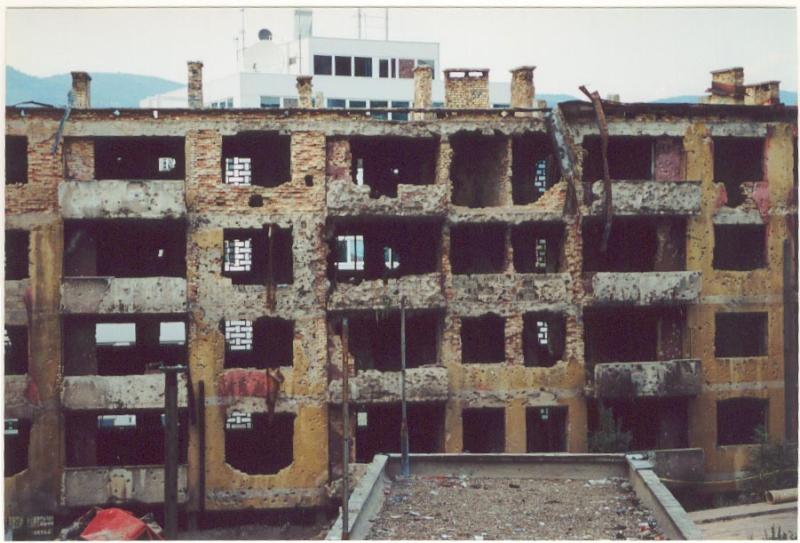
sARAJEVO7*

dEATH-lIFE-lIFE-dEATH7*

The man in the hat awoke one morning and thought, what if I am dead but don’t know it? What if I awakened dead, not living, how would I know the difference? What if what I took to be living was death, but I confused the two, put the one in front of the other, got them mixed up, muddled? What if death, being dead, is just life, but in reverse, death-life-life-death? Could one live with that, he thought, having it backwards, in reverse? Maybe I’m dead and waiting to wake up, to begin living, death-life. If I have this all backwards, back to front, he thought, what then? Where to begin, how to begin, why to begin, so much turmoil and puzzlement, addles the mind, he thought, like soppy porridge. This type of thinking made the man in the hat wonder, why did Charlton Heston hold his nose when he dove out of the sinking spaceship into the reservoir? Strange indeed, not a volitional thought in his head, Charlton Heston’s head, sad indeed: mercenary sad. The man in the hat, the broad brimmed hat, felt that life had neither reason nor rhyme, but was simply a random series of reoccurring events, some occurring more often than others. Charlton Heston held his nose because he was a sissy, not because of some greater ontological wherewithal, some categorical imperative. If he recalled, the man in the hat, Charlton Heston likes pistols and long-rifles, stun-guns and carbines, creosote and cannon powder, residues of a poor education and a middling intellect.

Friday, July 14, 2006

gRAVY and sALT cRUET*7

I will organize an old person’s fair, thought the man in the hat; where they could display, show off, they’re infirmaries; they’re toil nails and wean-tongues. There would be dancing and jumping, and a table reserved for confectioners and podiatrists. And a potluck dinner, with beans and gravy, salt-cruet and sappy meats, like boiled pork shoulder and minced dog, organic teas and after dinner mints, and wafer-thin after-eights, moil with chocolate and crème de menthe. Should his bad leg permit it, the man in the hat would ride a unicycle, to disprove the theory that all things seek they’re fatigue, they’re entropic fatality. He, the man in the hat, the Nietzschian tightrope walker on one wheel, gamy legged, wide brimmed hat wet through with slaver and Burgee’s. A codpiece, yes, he thought, a codpiece would be appropriate, cupping the foppery of his trousers, a votive coopery, bunghole tamped into place. The monocycle, yes, the tires choused down to the rims, flails and burrs of steal ribbing clacking against the pavement.

Wednesday, July 12, 2006

jURY-mAST7*

qUEEQUEGIAN tREE-nAILS7*

And the seizures, palpitations, colic, the fill-tilt throttle of a chest endemic with waste. Lung sacs bloated with corpse gas and fennel root. A peppermint sweetie lolled on the wean of the tongue, the curial for whooping, arrhythmia and sleepy-leg. Not for the faint of heart or weepy. He, too, the man in the hat, would become one of these, one of them, a colicky old man with incurable whooping and bird’s talon toe nails, a shamble legged man, a clochard. And they’re toil nails, old people, like split shale browned with nicotine, curled and striated, fucking mercenary indeed. Queequegian tree-nails, pounded into keel wood and jury-mast, and the whooping and sulfa smell, redolent of death and bad grooming, crumble and fester.

Tuesday, July 11, 2006

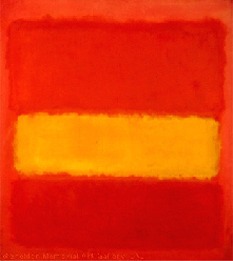
rOTHKO-4(7*)

sULFANILAMIDE7*

The bus smelled (or was it redolent?) of incontinence and peppermint, pocket candies worsted in cellophane, for staving off bad breath and whopping. He, the man in the hat, had a fear of old people, their sidling and bad posture, the manner in which they spoke in rhymes and anagrams, their funny hats and brown shoes. Yes, its true, he too had a sidle-leg, one trumped to the end of his foot, but he had learned how to walk without giving it away, drawing attention to his gaminess, his hobbling, the heel of his shoe striking the pavement like a matchstick. Old people smelled like sulfa, sulfanilamide, penicillin, death put on hold, in abeyance, staved off with phlebotomies and chalky suppositories. And the mints, wintergreen and anise, humbugs and licorice allsorts, a confectionary of malts and oil.

Sunday, July 09, 2006

nO 5-rOTHKO7*

dAY to dAY pODIATRY7*

The man in the hat did not wash his feet on Sundays, not out of religious observance or the fear of a payback by some unseen godhead, but as a reprieve from the drudgery of day-to-day podiatric cleanliness. Like a bed bugged clochard, the man in the hat ate bread rinds and marmalade compote, peal ends slurry with rime and allsorts. The bus smelled (or was it redolent?) of incontinence and peppermint, pocket candies worsted in cellophane, for staving off bad breath and whopping.

Tuesday, June 27, 2006

mAN in hAT w/ bEGGARS7*

jACKDAW7*

A jackdaw, forewings scurvy with bicycle oil, flapping outside the man in the hats lean-to, a symphonic reawakening, an aria without a French horn or oboe, no tympana or trumpeting allegro. No rest for the weary and down at the heel.

Thursday, June 22, 2006

bURGEE's mEDICINAL tONIC7*

She, the shamble leg man’s mother, died from impetigo and a virulent strain of whooping cough. She died corrupted; her lungs prowl with spirochetes and blackness. After her funeral mass, he read up on thalidomide and spirochetes, and virulent strains of whooping cough that blackened lungs like roofer’s tar. His shamble leg was his penance for not having grieved for his mother, for burlap skirts, vinegary breath, whooping, and the uneasiness in the crucible of her stomach.
One day among many, the man in the hat was out for a walk when he came across a beggar sitting with his hands crossed over his chest. When he asked, ‘why are your hands crossed over your chest like that?’ the beggar replied, ‘so my heart doesn’t jump out and run away’. ‘Oh’, said the man in the hat, ‘I see, you’ve got a fast heart is it?’ ‘No’, said the beggar, ‘I’ve got diabetes and my legs are all shaky and full of holes.’ The man in the hat tipped the brim of his hat and said, ‘better than a hole in the head, I suppose.’ ‘Any day’, replied the beggar, ‘shaky legs, too.’ A gun metal blue-gray sky and the man in the hat without an umbrella or cover for his hat; if it were to rain, which it might, he’d be left drenched and sopping. He looked down at the beggar, who was busy rearranging and sorting through his alms-cap, and smiled. ‘Might you have a spare plastic bag for my head?’ The beggar looked up, eyes straining to see the man in the hat, as the sun was broiling, and said, ‘why of course, yes, yes I do.’ He fiddled and scrounged through his belongings, a rucksack with string tied round the zipper eyelet, an old potato fermenting in a plastic bag, and his alms-cap, red and black with the coat of arms of the Vatican on the brim tip. ‘Here,’ he said, offering a grocery bag to the man in the hat. The man in the hat took the bag from the beggar’s hand and smiled, ‘so kind of you, so kind indeed.’ ‘You need some string for that?’ the beggar said, his eyes like moths. ‘Might be a good idea,’ said the man in the hat, ‘a good idea indeed.’ ‘You can use it to tie it round your chin, that ways it won’t blow off.’ ‘Right,’ said the man in the hat, ‘right you are.’

Tuesday, June 20, 2006

pEROXIDE and cLOVE oIL7*

The shamble leg man was known to drink thermoses of Whisky and dry Vermouth, cupfuls of broth sluiced with Listerine and Burgees’ medicinal tonic. He gargled with peroxide and clove oil, a recipe handed down from his grandmother, a seamstress with gray hair and a lazy eye that twitched like a metronome. She boiled burlap sacs in yeast and vinegar, and then stitched the sacs together with fishing line and a bone needle she kept in a mahogany box on her dresser. She called them chattel dresses, not burlap taffetas or sac cloth gussy ups. His mother, the man with the shamble leg’s mother, wore sac-cloth and burlap, scullery dresses roily with yeast and vinegar, chattel skirts with uneven hems and stitching. She smoked non-filtered cigarettes, Export A’s and Player’s, and drank Burgee’s medicinal tonic to stave off the chills and quell her jimmy-legs. She ate watercress sandwiches smothered in mayonnaise, and Rye Melbas that pricked her gums, beans with gravy and celery root, and anything boiled in a pot, hocks and shoulder, butt and cow’s tripe salted with brine. She loathed her mother, and took every opportunity to hide her bone needle, the one she kept in a mahogany box on the dresser. She took thalidomide for the queasiness in her stomach, and spat out her son, the shamble leg man, like a rotten oyster.

Sunday, June 18, 2006

mEAT-eNDS ans gRISTLE7*

The man in the hats great aunt Alma turned her own blind eye to her husband’s peculiarities, his cursed over anxiousness for green things and kale. The heat in the soup kitchen was inhospitable, an infestation of flies and scalp lice snapping against trouser hems, loading up on scatter and waste, mandibles truant with beans and gravy. ‘You want them dumplings?’ ‘Fuck off, I’m trying to eat’. A churl of pork bone loosening a tooth, spit up onto a plate lousy with meat-ends and gristle. ‘You want them meat-ends?’ ‘Can’t you see I’m trying to eat, leave me the fuck alone?’ ‘The soup, what about the soup?’ ‘Fuck off!’ Aunt Alma’s kitchen sugary with cinnamon and nutmeg, raspberry tarts left to cool on the window ledge, Uncle Jim shuffling his feet beneath the tabletop, truant with anxiety and small-mindedness. My great Uncle sheltered himself from green things, and slurped his soup like a madman, one eye on the windowsill, the other milky with spoil, made by a glassblower with a clove-lip and a black moustache he twirled at the ends.

Saturday, June 17, 2006

2@hAt7*

A molt gray sky is better than no sky at all, reflected the man in the hat. Thinking has its drawbacks, as do skies, blueness, and a green greenness that inveigles and atropines the eye, a pustule of socket and cornea. His plant, the one plant he owned, wept for hydration, moist waterwheel soil, not hard Bedouin till. He fed it spittle, excreta, a watershed of backwash, or simply left it to wither, like a placenta left out to dry on a scrub board, cordless and feeble. Like his great uncle, the man in the hat had no liking for green things, beans, string or whole, peas, armored or shucked, Lima, split or dismembered, broccolis or asparagus. He hid green things beneath the clatter of his plate; his nose turned up like a spoiled child’s, knees thumping the bottom of the table like a distressed kite. His good eye flittered like a tiger moth, crepe with custard and sleep. He lost the other one, the bad eye, in a sawmill accident, flint wood piercing the cornea clear through to bone.

Thursday, June 15, 2006

tHOMAS' lIVER

Some people are fated with Thomas’ liver, sopped with Port and Paddy’s cure-all, a phonetic mess of dilettantism and Welsh bolshie’s, a portrait of the drunkard as a young dog: her liver the size of a soccer ball, bloated and septic with corpsegas, briny with carrion and lye. She drinks to assuage the tremors, the scourge of Saint John’s Wart: hogshead tripe with blood pudding, an earwig salad, a light vinaigrette on the side plate, not for the faint of stomach or kidney, renal failure and so-and-so. Her children sat in the squalor of her thoughts, reading takeout menus and other people’s mail. Linking sausage to sausage, Eaton’s sells blood pudding casing, twenty-five to the dollar, skillet-fried with bacon rind and allspice, a peppering of confectionary sugar to stave off the spoiling aftertaste in the scrotum of her throat, a banshee screeching in the pendulum of her sternum. The man in the hat felt neither pity nor sadness for the woman, as he had more important things to attend to, three-legged dogs and wingless birds, shelter soup and scum topped Jell-O. Perhaps, he thought, I will offer my soup to the shamble legged man should next we meet, and save the Jell-O for a late night treat, or save it for the girl with the hearing box haltered to her chest, as she deserves more pity than scorn.

Tuesday, June 13, 2006

sHAmBLE-lEGgED mAN7*


2@9*hAT

Nights are cold, thought the man in the hat, cold with worry and fretting. Wrapped like a sausage in tripe, the man in the hat slept the sleep of the sleepless and troubled. An embolism, he thought, perhaps I have an aneurysm waiting to implode in the tomb of my head, blood pudding, a foul tureen or consommé. Too much dog meat, he thought, sinewy and undercooked. The pressure was assuming a life of its own, pushing in on the walls of his skullcap, inching its way into the viscera of his mentality. Soon, so he thought, his thoughts would be a scrabble of misnomers and tropisms, improper spelling and grammar, a catalogue of misjudgments and folly. His hat, yes my hat, that is all that’s preventing me from falling in on myself, collapsing into myself, my innerness, he thought. A tropism of hats, some with tassels and baubles, and others with felt liners and calfskin outers. He recalled, against his better judgment, a woman he knew whose father forced her to eat blood pudding and headcheese for breakfast, a placental mush stirred bloodied with a fork, wingtips of blood and gruel discolouring her face, a clownish smile gone terribly wrong

Monday, June 12, 2006

olD mAN, hAT, bUSTED lEG9*


tHE hABERDASHER7*

A soup bone gray day, a saltlick of clouds above his head, the man in the hat’s thoughts on veal chops and chicken legs, figs and a thermos of black tea minted with anise and allspice. The haberdasher that tailored suits for the man in the hat was neither Italian nor Portuguese, but rather Angolan, but of a pale brown complexion. He wore a fez, red with blue and yellow tassels, and seldom spoke unless spoken to. He made extraordinary suits, serge and gabardine, wide-lapelled and narrow, double-breasted and single, fob pocketed or sporty. He smoked kef, though sparingly, and ate little other than chick peas and parboiled rice, generally wild, brown and glutinous. His wife had one eye, the missing one gouged out by a less than propitious ex-lover who worked as a sommelier for a small West African restaurant. She smoked long slender cigarettes, which she held between her thumb and forefinger, but found kef unsavory and odiferous. She didn’t mind that her husband partook of kef, but rather he smoked it in the storeroom or the alleyway behind the store. The haberdasher tailored suits from hemp, smoothing out the seams and folds with a steam iron that hung from the ceiling with box twine. He generally smoked kef in the evenings, once the day’s work had been done, and his wife had gone out to play bridge or pinochle, which she did most nights, thereby avoiding the numinous pong of kef. ‘May I ask what side you dress on?’ asked the haberdasher. ‘Either side, it doesn’t much matter’, answered the man in the hat, his hat off centre to one side. ‘Might I suggest?’ added the haberdasher, ‘that to the left is most suited to a man of your stature, as it will allow for a freedom of stride I believe you will find most satisfactory’. ‘Thank you.’ Said the man in the hat, ‘of course, as you suggest, after all, it is you that tailor the suits, not I.’ ‘As you wish, dear sir.’ The haberdasher reached for his chalk and sighed, ‘what a day indeed,’ he said, ‘my dear wife has a dislike for kef, which, as you know I smoke, though sparingly of course’. The man in the hat shifted his weight form one foot to the other, re-cocked his hat, and closed his eyes. ‘Of course, please feel free to light one up; it certainly makes no difference to me.’ The haberdasher drew a curved line along the inseam of the man in the hat’s leg and smiled, full toothsomely. ‘You are too kind’, he said, ‘and, might I add, a fine gentleman, both courteous and unduly considerate.’ ‘If you like,’ said the man in the hat, ‘I have some Jell-O you might find of interest, strawberry and kiwi’. The haberdasher drew one last chalk line on the man in the hat’s trousers and said, ‘yes, so kind and considerate indeed.’

Saturday, June 10, 2006

rEGIONS of the gREAT hERESY


jERZY fICOWSKI

sKLEPY cYNAMONOWE

cROCODILES and sANITORIUMS

bRUNO sHULTZ (1892-1942)

sKY pIMPS

The sun is hiding, he thought, holed up in the barrows of a whore’s skirts. The clouds are the sky’s pimps, feathered hats, pigskin eyes, hogsheads. The rain and brusque wind oblige the shamble legged man to skim across the top of the pavement like mercury. He moves like graffiti, curlicues and haloes of colour. There is nothing more inveigling, thought the man in the hat, than the truth. The truth being what one is accustom to accepting as true, an act of inveiglement, a pimply way of getting what one wants. Hogshead soups, brothel gumbo, bouillabaisse, molder and commode, a purulent fester of rancid mutton ladled into outstretched bowls.

Thursday, June 08, 2006

mAN28*

The man in the hat looked at the man with the shamble leg and frowned, ‘never the soup’. The man with the shamble leg sighed, his lips tightening like sail thread, and said, ‘Jell-O’s better than soup anyways, soups too hot, anyways’. He swung his left leg over his right leg and pushed his plate across the tabletop, his eyes two specks of watery garnet. ‘Fritters’, said the man with the shamble leg, ‘corn fritters.’ ‘Pocked,’ said the man in the hat. ‘Yes’, replied the shamble legged man, mocked with corn’. ‘Pocked,’ added the hat man, ‘not mocked’. ‘Pocked with mocked corn’, said the shamble legged man, ‘pock mocked with yellow corn, yes, corn’, he said, ‘yellow mocked pocked corn, fritters, corn fritters’. “I see’, said the hat man, ‘yes, I see. Pock mocked with corn, fritters of mocked pocked corn.’ ‘Fritters, yes,’ said the legged man. ‘I hear you,’ said the man in the hat, ‘loud and clear.’ ‘As a bell’, added the shambled man. ‘Pealing and pinging and chiming’, said the man in the hat man. ‘You want your soup?’ asked the shamble leg man. ‘Jell-O,’ replied the man in the hat, ‘not the soup, never the soup.’ ‘Like a bell,’ said the shamble leg man, ‘like a chiming, pealing pinging bell.’ ‘You are welcome to the fritters,’ said the man in the hat. ‘Pocked with mock corn,’ added the shamble leg man. ‘Mocked with pocked corn, yes,’ said the man in the hat. ‘Corn fritters, yes, never the soup,’ said the shamble leg man. The shamble leg man swung his right leg over is left leg and sighed, ‘always the Jell-O, never the soup’.

The sun is hiding, he thought, holed up in the barrows of a whore’s skirts. The clouds are the sky’s pimps, feathered hats, pigskin eyes, hogsheads.

Wednesday, June 07, 2006

dEMENTIA sOU'wESTER

He was a truant thinker, thinking thoughts not based in accepted wisdom, incomplete, inarticulate thoughts. He thought thoughts at random; series and computations of thoughts thought backwards and forwards, forwards and backwards, an incoherent garble of pretense and dimwittedness. When not wolfing down birdseed and apple skins, he sat at the table across for the man in the hat, his sou'wester folded crosswise on his lap, eyes blank as death. He was loosing his mind to dementia praecox. He heard voices, yowling tenors, high-pitched sopranos, deep guttural bassos. He saw spiders and millipedes, toads and sprites, dead raccoons and earwigs. He sat, the man with the shamble leg, in the absence of his thoughts, thinking backwards, then forwards, then neither forward or back. He sat sitting, dreaming of birdseed and apple skins, loosing what little mind he had left to voices and pictures that roamed the scourge of his brain, squelchy with Listerine and breath mints. Nothing happens for a reason, thought the man in the hat. Not even nothing, he thought, not even that. Everything is accidental, haphazard, unsystematic, and not worth the bother of bothering about. More ink than words in the Bible, he thought, how bad mannered, obscene, but not worth the bother still. Loosing one’s mind seemed a small pittance to pay for an acquittal from the madness, the obscenity of it all.

‘You want your soup?’ the man with the shamble leg asked the man in the hat. ‘Jell-O’, he replied. ‘You are welcome to the Jell-O, but not the soup’. The man in the hat shuffled his feet beneath the table, ‘Jell-O, strawberry with fruit bits in it, your welcome to that. Not the soup?’ said the man with the shamble leg. ‘Not the soup, never the soup’.

Monday, June 05, 2006

mAN2*7

Another man with a pear-shaped head, hair matted in cornrows, spun a tale of abuse and maltreatment at the hands of the police, a litany of beatings and sharp invectives. Paranoiac gibberish, a cacophony of inarticulate voices, word salad, echolalia, he spoke in riddles and hexes, like a Skinnerian child in a wooden box, a Bedlam outpatient. Men with boxthorn hats, some molded out of crepe paper and glue, others pilfered from other men’s heads while they slept. Globs of dry sputum, nightsticks batting in feeble skulls, faces pockmarked with blacktop and yesterdays throw up. What were these men being sheltered from, certainly not spoil and privation, as these were all too common occurrence, a sort of impecunious insolvency, torment and misery, wooden boxes and shattered skulls.

One morning the man in the hat awoke abruptly, his heart racing, neurons firing like cherry bombs. He clutched the bedpost and waited for it to stop. It didn’t, it never stopped. Mr. Potato Head in sackcloth and Birkenstocks, feet conniving the void between agony and ecstasy: Skinnerian boxes, impecunious insolvency, torment and misery, sanctuary for the paranoiac and feeble. The man in the hat longed to see the beauty and genialness in things, not ugliness and want, which he saw against his better judgment, a judgment that wasn’t better after all. He yearned for joyful smiling faces with orthodox habits, teeth straight as arrows, hair glistening with gel, reconstituted from straw and fallow. He didn’t, he saw none of this, these things. He saw poverty and disfigurement, noses sharp as whittled sticks, eyes sunk deep into concave sockets, ears like curds, fingers bent into arthritic pretzels. He heard bawling children clutching threadbare dolls, heads shorn from necks, hair frizzed with constant thumbing, mothers with more ink on their bodies than words in the Bible, teeth chattering with inner cold. Corpse gaseous with cut-rate perfume, sanguine, freakishly pleasing, yet disturbing, insolvency, a discrepancy between what exists and what is dead, funereal wood. The antagonism and bitterness of savages, no way out of the circle, the enclosure, an imprisonment within one’s own body, a choleric transubstantiation of body, mind and essence, an existential famine. Everything is allowed, but nothing permitted.

A man with a shamble leg, a deadweight he dragged like a cursor, ate nothing but birdseed and apple skins. He coexisted with animals and rain. He ate from birdfeeders and trash tins, fighting off crows and gulls. He drank from cesspits, hands cupped and drawn slowly to his mouth, a cockroach with a fleshy mandible.

Thursday, June 01, 2006

mANGE and fECES

One-eyed dogs mange with feces, lynch tongues cirrhotic with fester and blain; he saw them everywhere, always. Perhaps, he thought, it was his own jaundice eye, a sightlessness that saw only the underbelly of things, dogs, humans and those straggled at the bottom rung of the ladder. The prison that exists within, as some suggest, is a lie, prisons are outward projections, social codes and mores, not bad genes or defective willing. Life is a random series of reoccurring events, many of which we have no control over, a psychotic repetition, duplicitous chicanery. He thought, the man in the hat did, that killing, dressing and eating a dog, one that had no chance of making a go of it, was a blessing for the dog, a way out of a life of repetition and meaningless abjection. The man in the hat, so he felt, was the patron saint of dogs, their benefactor, their profane Jehovah. He relieved them of their suffering, the mange and scourge of their lives’, ransoming them to a world of bounteous food, vast meadows and trampled sedge.

Things, the world of facts, are growing greener, olive drab, emerald, yellow-green, verdant, leafy, an iron oxide greenness. As long as greenness contains itself to nature, to trees and bushes, grasses and flowers, the man in the hat is content, as content as a discontented man can hope to be. Not gangrenous or purulent with ulcers, not fetid green, the augury of rotting and death, but a natural, macrocosmic green, a green that invites wonder and joy. A burgeoning greenness, an elephant frond green, petiole green, a lush forested green, a blissful enchanted greenness that enraptures the eye. Green upon greenness green, green.

Tungsten steel molded to fit round felon bone, a leg gone palsied and numb, deadened, insensate, a drag anchor shoehorned into place with a podiatrist’s speculum. He saw, the man in the hat did, a person tormenting himself down the sidewalk, the demilitarize zone, polder-stepping like a staggered calf. His mother, thought the man in the hat, probably took some antidote, a pillory to ward off vomiting and nausea, a parturition antitoxin. Caudal tails and miserly legs, wee stumps and hogs feet, dwarfed arms, his mother’s retching assuaged and corrected. He remembers a little girl from his childhood who had a hearing box strapped to her chest, an armamentarium of wires and coaxial cables, like spider’s legs, cinched round her back, held in place with a leather halter. A droning staccato, like bees hitting a windshield, emanating from her chest, a cybernetic ritornelle she controlled with toggle switch attached to the front of the box. The girl with the hearing box strapped to her chest heard no birds warbling, no children squealing with delight, tiny feet carrying them across paddocks shimmering with summer rain. She didn’t hear the cars whizzing past, tires fluting gravel onto the neighbor’s front lawns, lawnmowers spitting out stones and cog pins sheared through to white metal. All she heard was a low murmur, vibrations bouncing off her chest, straps caught in clothing too big for someone so small and inelegant. Perhaps, he thought, he could catch a tiny bird, a wren or a chickadee with frail, spidery wings, stomp it to death, panfry it with garlic, fennel and cold-pressed olive oil, wrap it in newspaper, and then offer it to her as a sign of his own empathy for her condition. Perhaps they could eat it together, perhaps on a picnic bench in the park, or behind the Dominion store behind the Waymart. He could unwrap it, spreading it out on the newsprint in front of her, then offer to cut it into ribbons small enough to clutch in her tiny nail-bitten hands. All things were possible, but very few permitted. Those few things that were allowed, tended to be so miniscule and farthing that it wasn’t worth of the bother of pursing them even were they placed in the upturned palm of one’s hand. The false impressions that reality left him with, forced the man in the hat to find other ways to make sense of what was so senseless and illusory. Trying to line up what one saw, experienced, felt and heard, was a lesson in the non-receptivity of his mind, his failure to stitch together the material, the phenomenal, with the categories and representations in his head. He allowed himself very little, and those few things he did, sparingly.

The man in the hat, he lived in a two-room walkup without a stove or icebox. He cold stored his perishables, which were few, on the ledge outside his bedroom window, and cooked beans and legumes on a hotplate he’d found in someone else’s rubbish. When he hadn’t the strength or wherewithal to stalk, kill and dress a dog, he ate at the homeless shelter, where they served tepid soups with squelchy vegetables and chowder that tasted like boiled fish roe. He ate with his back bent over his plate, alone, seated next to the fire door, his feet at constant shuffle beneath the tabletop. He dreamt of thirst quenching ales, lagers and stouts, of pastries folded one on top of the other, buttery crusts spilling over with mincemeat and fruit. He carved up red meat roasts, venison, mutton, and picnic hams in his sleep, boiling pots of potatoes, yams and rutabagas, skimming the froth from the simmer with a wooden ladle. He drank pear juice, sodas and applejack with an avarice broaching on madness, fingers clutching bottleneck and spout. He swigged cognac straight from the decanter, pearls of sweet, syrupy manna scalloping his tongue. He dreamt of caviar, black as road tar and crackers barbed with sesame seeds and cumin, spiced with chilies and minced pepper. He ate double over his plate, digging for scraps of boiled meat, a curd of potato, a yellow-tinged carrot, his feet jerking fretfully beneath the table. One time a man sitting across from him, his nose splayed diagonally across the tomb of his face, a cankerous tuber, spat up a mouthful of creamed corn, his dentures receding into the catacomb of his mouth.

Monday, May 29, 2006

oLD mAN2*9

Some trees are greener than others, so he discovered; some so green they almost appear oceanic. True, the man in the hat has never seen a moraine lake, one so blue-green that it appears inanimate, but he has seen snapshots and pixilated images on TV, and once overheard two men talking about one in a laundry mat, perhaps a café. He once thought that the life of a roughneck, heaving massive chains round drilling bores, would be to his liking, but decided against it when he realized that he would need to be around other men, some with roily skin and stale breath, wearing coveralls soiled through with machinist’s oil. Being around others was especially troubling, even if they stood a good distance away from him, which, so it seemed, they seldom did. Everywhere he went he felt like he was bumping into crowds of people, people with little respect for his wellbeing and general health. Some with breath so rancid he could smell the rottenness of their stomachs, others with such horrid skin diseases he feared contracting some incurable rash or callus ailment. Green is the sign of a gangrenous infection, or simply an indication, one seldom mistaken, that a person has lousy washing and grooming habits. Blue and brown are the signs of a robust and hearty life, gestures of proper grooming and respect for others that may find too much green troublesomely indecent. But the unwashed have neither the patience nor job training for such delicacies, both of which require a middling degree of self-awareness and education, or at least a scant desire to obtain them should the opportunity present itself, which, of course, it seldom does. The man in the hat sees no reason why one should be pressured or cajoled into investigating one’s life, even should it be done in the privacy of one’s home and the results decidedly positive, or at most less troubling. He has no difficulties filling up his time, pursuing his love for tightrope walking or riding buses, or simply trying to conserve what little energy he has, stockpiling it for some new venture or yet to be determined avocation, which, of course, never happens. People, who have an individualism for wearing hats, seldom do anything that would in anyway compromise or increase the risk of loosing their hat. The hat, of course, being the reason why they shake themselves from sleep each morning, in anticipation of either choosing a different or alternative hat, or dusting off the one worn the previous day. Personal style and elan in such matters are essential, as are proper hygiene and choice of footwear. What a man wears at either end of his body is significant, as it allows one to make the observation that the two polarities match and are in accordance with proper style and grooming. These two seemingly divergent opposites have a logic and soundness all their own, one that carries with it a significant degree of responsibility and prestige. Suffice it to say, what one chooses to crown one’s head with, should never be taken lightly, subjected to mockery, or made into some burlesque sideshow. The hat is a sign of individualism, not the topic of cajolery or trifling bad manners.

He knew of people, the man in the hat, who used coffee filters as toilet paper, unscented and with tiny anabolic perforations for distilling pulverized coffee beans. These same people, he assumed, ate nothing but prepackaged food and candies, drinking liter upon liter of sugary colas, orange Fanta and grape-aide. Their children, should they, the children, be so unfortunate, were probably infested with head lice and other festers’. Their skin raw and scalloped with nit bites, itchy with grubs and maggots laid in soft tissue and muscle. He recalled stopping once to drop a coin in a almsman’s cap, thinking as he did, that his choice of hat was far superincumbent to the almsman’s, who’s cap was used as an offering plate, not to shield the sun or to add to one’s general appearance. In some ways he, too, was a beggar, but his baksheesh were thoughts and ideas, not coins and cigarettes, charity of mind, not hand me downs and castoffs. He also knew of a man, someone from his distant past, a past all but forgotten, who was forced into beggary when he lost his position as a postal clerk, a job he’d held for twenty years, perhaps longer. The man, the one he once knew, had a nervous tick that caused the left side of his face, the prepuce of his lips, to twitch violently whenever he felt unduly stressed or out of sorts. After his fellow clerks in the postal office made a litany of complaints, he was let go without a pension, severance or a shake of the hand. After struggling for a year or so, living off what little savings he had hidden in a pillowcase stowed away at the bottom of his closet, he bought a cap, one too big for his head, and took to begging for spare change and cigarettes. Hunched in a doorway across from the public library, a place he never visited, he placed his too big hat with the brim upside down in front of him, his legs folded on top of the other, and waited. If he were lucky, he might count out fifteen dollars from his cap, but, sad to say, this was the exception, as more days than not he was lucky to count out five or six dollars, enough for a loaf of day-old bread and a dented tin of sardines. After five years of this, day in and day out, he took to selling off what possessions he deemed were unnecessary, secondary to his life, until all that was left was his bed, a broken chair and a radio that only picked up static, a black cicadic noise. Half-smoked cigarettes, filters buttery with drool, and coffee, someone’s unwanted dregs left at the bottom of a Styrofoam cup, were a luxury, things he coveted with an eye to proper sustenance. He is dead now, this man from the past, rotting in an unmarked hole in the ground in some nondescript graveyard, backhoe dirt dumped and tramped down with gravedigger’s boots, hobnailed soles worn down to steel tacking. No one will visit him or remember he existed at all. The day he read the other man’s obituary in the morning paper, the man in the hat went to the graveside and placed a hat, brim upside down, where he thought his head would be, the grave dirt stomped with boot prints.

A late spring breeze, a concerto of birds, some blue and red, others dun brown and yellow, trilling and chirping like hellcats. A squall of blue sky, fleece white clouds, sheep hobbled to the slaughter, life is unnecessary. A bird perched on a branch in a tree, the branch breaks, the bird plunges to its death. The chirping and trilling stops, birds are surplus, not worth the bother. The man in the hat thinks to himself, to no one, a bird, a cat, a hellcat, all surplus, superabundant, inessential, whether blue, red, dun brown or yellow, not one iota. Birds, he suggests to himself, alone, are devilfish, devilfish with wings and tiny clawed feet. Not even worth the bother of eating, broiling, skillet fried with bacon fat and the green, greenest shallots. A Styrofoam white moon, a fat yellow jaundice whore with fencepost teeth and tiny misshapen feet. Life is unnecessary, a waste of all that energy and good manners.

When out walking one day, something the man in the hat did sparingly, he saw a three-legged dog striking its way along the pavement. He let it be, feeling that it was an alms-dog, and should be left to its own discommode and beggary. Some dogs are just not worth the bother. Perhaps, he thought, if I were to catch it a bird, trampling it with the soles of my boots until dead, I could offer it up to the dog, a small benefaction of my own sympathy and selfsameness. The three-legged dog, so he felt, would eat the bird with great relish, teeth clacking, a white slaver frothing its snout.

Wednesday, May 24, 2006

sCHOPENHAUER'S fLAGON

Old Man and Hat

He wears a hatman’s hat, broad brimmed, felt brown and quail with feathers. He has on a haberdasher’s jacket, brownish gray with widespread lapels and a two-rose buttonhole. He rides a bicycle without a horn, flagon or bell. His trousers, brownish brown, are cinched round his ankles with tape; the cuffs tucked into his galoshes with object care. The man in the hatman’s hat eats sparingly, generally boiled dog meat with asparagus and potatoes, boiled with the skins left on. He prefers his meats and vegetables boiled, as they retain less of their flavor, dog meat, as one might imagine, having a too strong domestic taste, which is reduced from excessive boiling and mincing. Mincing, as opposed to dicing or cubing, being the preparation of choice, at least for the man in the hatman’s hat, as his knowledge of culinary technique is middling to nil.

He is neither a religious man nor an agnostic, or for that matter an atheist or a true believer, as he finds anything organized unwholesome and troubling. He has a penchant for small dogs, cur and dioxins being more to his liking. Yes, he eats sparingly but with great relish and clacking of teeth, which have been abraded to stumps and gate stiles, leaving a horrid aftertaste at the back of his throat. His esophagus is striated with dog and asparagus, both of which, due to improper cooking, he finds troubling to swallow. He eviscerates the dogs, which he catches behind the viaduct behind the Sears store, with a lancet he borrowed from an acquaintance with whom he is no longer acquainted.

He hangs the meat to dry, or cure, as he sees curing as a more efficient manner of dressing dog, behind the viaduct behind the Sears, where he has constructed a lean-to out of scrap linoleum and castoff two by fours left behind once the Sears was built. Beneath the man’s hat he has a whorl of hair, crenellate and tufted in cornrow rows, a row or two which have been spiffed with Brill Cream to effect an authoritarian look, which it does not, though no harm can be attributed to trying. He likes his hat, and wears it when eating, even when the heat is inhospitable and his hatband gets soaked through to the felt with perspiration and Brill Cream. He is extremely short, dwarfish, barely the size of a nursling or a small domesticated lapdog. He likes tightrope walking, and sees it as a sort of unofficial avocation, one which he would like, time permitting, to parlay into full-time employment. He reads nothing but atlases and Popular Mechanics, sometimes a book on soccer foot positioning, to help in his own foot positioning for the purposes of tightrope walking.

My grandfather wore a hat, though had neither interest in nor dexterity for tightrope walking. He took snapshots of family gatherings and building sites, both of which he found unendingly fascinating. He preferred the fedora, the bowler when he was of the mood, to the simple hat or cap. His tertiary interest was in painting, with oils and acrylics, which he applied to enamel boards and stretched canvasses, many of which hang on the walls of my flat. He was a short man, but by no means dwarfish or nursling. The hat, or hats, he wore, covered the bald spot on the crown of his head, where faint wisps of gray hair grew in defiance of capillary baldness. My grandmother, to the best of my recollection, never wore a hat, preferring the luster and thickness of an unadorned head of womanly hair. Yes, she did once don a sunbonnet while boating with my grandfather on a pristine, bottomless lake in the Eastern Townships, but more as a favor to my grandfather, who feared she would swoon and subsequently faint from heat prostration. They had a dog, Simon, which they took care of for my uncle, an English teacher with an ex-wife who he fondly referred to as the cunt. She drove a Volvo sports car, a graduation gift from her wealthy parents, both of who drove standard Volvo sedans.

Yes, the man in the hat, lest we go off on a tangent, which, as you know, can be most difficult to return from. Did I mention, I fear not, that the man in the hat is clubfooted, dragging his clubbed limb behind him, which causes him a great deal of discomfort and no little humiliation? One acquaintance, with whom he is no longer acquainted, referred to his foot as a cudgel, and offered to shellac it with a badger’s hair brush that he kept in a scabbard on a belt which encircled his trousers. I doubt he would have shellacked the man in the hat’s foot, though stranger things have been propositioned, one might suggest. This man, the one-time acquaintance of the man in the hat, rode a bicycle with a flagon attached to the handlebars with a scotching of tape, from which he sipped Whisky through a straw. He also, this man, wore a hat, though one that was in no way a cover up for balding, as he had a full, healthy head of hair, tresses of which dangled from beneath the brim of his hat. He was not, to the best of my recollection, of the Jewish faith, though one could, I suppose, draw such a conclusion. He neither owned nor ate dog, but saw no reason why someone, should they be so inclined, should be persuaded not to do so if they found it a sumptuous delicacy. Meat is meat, he contended, regardless of its begetter or ancestry. The man in the hat, however, has some moral restraint, and will not eat a dog that is smaller than a cat. Having eaten a cat, which he mistook for a small dog, he considers the experience a most troubling one, one that he has never quite forgotten, much as he has tried.

In history, yes history, there have been many a great man who was a tightrope walker, many of whom fell to their deaths as a result of their avocation. I have neither the time nor patience to recollect who they were, but suffice it to say, and I give you my word, there were many. His choice, the man in the hat’s choice, to take up the avocation of tightrope walker came about as the fulfillment of a childhood wish. He wished he could, so he did, fulfilling a wish that had dogged him since boyhood. One might conjecture, should one be so disposed, that there is a connection between tightrope walking and the eviscerating, boiling and eating of dogs, even if this connect, at first glance, seems improbable. I assure you I am not making this up, but simply recollecting for someone who prefers to remain anonymous.

Long ago, when the man in the hat was younger, a boy, he was prescribed a therapy of drugs to curb his appetite for running round aimlessly in circles. He did so, darting in and out and around objects, many of which we put in his way to prevent him from whetting his appetite for running in circles, his tongue slapping the side of is face, his eyes tightly closed. He claimed that running in circles made him feel at ease, lessening the horrible anxiety that he was prone to and experienced without end day in and day out. His parents, under the doctor’s supervision, decided that wearing a hat (not a straw cowboy hat with a drawstring around the chin, or a sharp sounding whistle, but a man’s hat) might stop their son from his frenzied running in circles. Thus began the man in the hat’s disposition for wearing a hat, long after his running in circles had stopped. It might be suggested, perhaps, that there is a connection to be drawn between wearing a hat, one inappropriate for a young boy, and the eating of dog meat in later life. I see no reason why this might not be the case, given the vagaries of life and the backwardness of psychiatry and insipidly bad parenting. A gestalt of images, some half, others mixed together to form a montage of likeness and facsimiles of likeness’, combined to confuse and addle the child in the hat. A partnership between a child’s building blocks and a shaman’s trickery, a slight of hand done in the open. The man in the hat, seeing no viable way out of the dupery at hand, simply gave into the therapy, learning in the process to disassociate reality from thought, sophistry from authenticity, sorcery from truthfulness. In this manner eating dog seemed neither extraordinary nor immoral, nor, for that matter, unseemly or horrifying. Meat is meat, after all, regardless of ancestry or breeding. Self-reflection, he was told, is the hallmark of humans, what differentiates a thinking thing from a reactive or non-self-conscious thing. A dog, for example, doesn’t reflect on what it is about to devour, but simply gnaws it into bite size smithereens. Eating a dog, then, is nothing more than a natural reaction to hunger, and one’s self-consciousness of that hunger. Broiled, spitted, slow-cooked over an open fire, skewered, stir-fried or baked, it’s all the same, meat. Carnivore, omnivore, glutton or epicure, the end result is the same, satisfying the want for food.

Mt grandfather, who wore a hat, a fedora with a silk hatband, and my grandmother, who once wore a hat in a boat in deference to my grandfather’s pleading, liked roasts of beef, parsnips, Brussels sprouts and white bread, to sop up the gravy and bits with. My grandmother, who had no great like of cooking, preferring stitching and rug hooking, boiled everything in the same pot, meat, vegetables, spices and dumplings. To the best of my recollection, they never once ate dog, even though they had one around and at hand. Their son, my uncle, referred to is ex-wife as a dog, a cur with wide ankles and a barking cough that annoyed him to no end. The man in the hat, as is of his mien, would have eaten their dog, Simon, had the opportunity presented itself, standard poodles, in keeping with his moral approbation, being a tasty festive dinner. The standard poodle, he felt, was best prepared as a roast, with the appropriate vegetables as a side dish.

The man in the hat on the bus, which was how he referred to himself when he was out and about, seeing to errands or simply to test his patience and intolerance. The most common hat, he discovered, was the standard baseball cap in a variety of colours, some with tags on the headpiece, others with stitching, names and insignias that represented gods only know what. Many seeming to have no other purpose than to attracted attention to the wearer and their hat. Vagabonds, hobos, derelicts and the deranged, all seemed to find their way onto the same bus that he happened to be riding. An enormously fat woman with an proportionately fat toddler, her face a squab of veins and blotches, pressed into the seat next to him, her child screeching like a banshee. Or a bawdy woman with chicken scratches on her arms, nodding back and forth, her neck seemingly incapable of supporting the weight of her head. A fancy man with in a fancy hat, teeth the colour of corn, needling the bawdy woman with the screw of his elbow. A traffic jam of perambulators and baby carriages, old people shuffling behind walkers made from tube steel, leatherette and Velcro, tires splayed through to the rim. And all that hacking and coughing, and the odor of peppermints, clothes recently unpacked from mothballs, mildew, and the blight of necrotic flesh. He thought of them, all of them, as dogs, creatures lacking in self-consciousness and purpose. The unprincipled fat woman, even though the sight of her made him sick with dread, he would eat, boiling her with leeks and garlic, making sure to skim the oily fat from the top of the simmer. He imagined there were dogs that size, even though he had never seen one or known someone who had.

The bus was a phantasmagoria of delinquency, a steel sarcophagus stuffed to spilling with the odds and end of humanness. He, the man in the hat, felt there must be a hierarchy of humanness, one where the incurables were at the bottom rung, the ambulatory and half witted in the middle, and those on the verge of destitution somewhere near the top. There were days, too many to count, where he felt that he was somewhere in the middle, between the not quite incurable, those held in purgatory for no other reason than bad luck and beggary, and the ambulatory, just a hair below the destitute and downward spiraling. At times like these the craving to run in frenzied circles was like a hunger, a need to split the infinity of his being in the world of things. At times like these, the urgency to disassociate, to escape from it all, was impossible to censor from his thoughts, as disordered and random as they were. He would recall his grandfather’s fedora, his grandmother cowed in a sunbonnet, her eyes staring discerningly at the clear, blue water; and the smell of dog broiled over mesquite coals, the skin shriveled like curdled milk, a scratching at the back of his neck. A downward spiraling he was helpless to put a stop to, and even if he could, wouldn’t have known how to. Wretched bad luck, beggary, a busload of half-wits and incurables, and a sour burning sensation at the back of his throat that caused him no end of worry.

When it rained, which it did, almost habitually, the man in the hat would fasten a kerchief to his hat with safety pins and tape. Actually it wasn’t a kerchief, but a bathing cap; the sort used by old woman and small children, a precaution against earaches and pus boils. Gobbets of rain would bead on top of the protective cap, preventing his hat from getting watermarked and soggy. He noticed that the deranged and half-witted seldom wore hats or rain bonnets, and how they scuffled through the rain seemingly unaware, or caring less, that they were soaked through to the bone, hair matted like rug hemp. He neither felt sorry or pity for these poor creatures, but rather avoided them at all cost, sometimes parrying round them, or rerouting his trajectory to avoid contact with them. Rain was not God’s tears, as some suggested, but nature’s way of wearying the incurables from the face of the earth. His, the man in the hat’s rain slicker, was standard yellow with buttonhole clasps rather than snaps. When he was a boy he had a squall jacket, with cinch cord at the bottom to keep it from bluffing in strong gale force wind. He learned to sail, but sparingly. Like most things he did, or put his mind to, an economy of energy was the first principle, the one he expended the most energy on. For the boy in the hat, entropy was something to aspire to, a complete cessation of dynamic thought and action, an inertia of sorts. He willed very little, and those things he did with an eye to despotic inactivity. It rained for a year, perhaps more; clouds the colour of poached mutton tarnishing an otherwise blue-gray sky. But the man in the hat slogged on as if under a robin’s egg blue sky, his hat safeguarded beneath a nimbus of polymerized cowling. Never wearying, housed beneath a luminous aurora, his galoshes splitting infinity in two, he trudged on, his slicker cutting a V in the mutton gray sky.

He kept a scrapbook where he affixed pictures, odds and ends, of those things that he found intriguing. Pictures of safaris, which he found irresistible, Banyu trees slung with monkeys and red-faced gibbons, salt grass where lions and jackals skulked like devils, other men, like himself, in ox hats shouldering impossibly heavy rifles. As far as he knew these places didn’t exist, as he had no first-hand knowledge to verify their reality, no way of knowing if places other the one he inhabited existed at all. Yes its true, safaris and red-faced gibbons have very little of anything to do with the day to day drudgery of life, but the imagination does, and the man in the hat’s is exemplary. His capacity to disassociate from the moment, his inimitable endowment for finding unreason in reason, is without stead. He lives a life of absolute disinterest, an almost disinterest in his own disinterestedness, a disinterested disinterestedness, so to speak. He cares for little, not even his own upkeep, and would rather watch stragglers and knockabouts going about the routines of the day, than pay attention to his own interests. Finding his own meager existence not worth of the bother of mentioning, and when he does, in the third person particular, he sees no great need to make sense of the senselessness of his own existence, his ontological wherewithal, his disinterest in his own disinterestedness. For him, and perhaps those like him, though he has never met one, another like himself, life is one long arduous, time consuming translation from one language to the other, neither of which he has mastery of. Decoding codes, re-transcribing an enigmatic pandect of untranslatable nonsense, inane chitchat, blather. Language is a decoy for stupidity, an excuse for prosaic chatter, a waste of precious time, which, the man in the hat feels, we have so little of.

Sunday, May 14, 2006

eUDAEMONIST sPOILAGE

Dogwood Wooddog

The dogwood tree outside my bedroom window spawns the greenery of late spring. Fucking stupid tree, weevil knots and heartwood, pensile roots and that fucking thirsting. Gangrenous olive grayish greens, septic with fecal purulence and douse. And the wind, so fucking mercenary and bad mannered, enough to send one hi-tailing it to a less inhospitable clime. Leaves like box kites, shaped into withered hands, prawn with arthritic knots and bone curd. Gonorrheal gray, a livid supernal excrescence. Sermonic nonsense, a down right shame of nature. A tree is not a Eucharist, unless, of course, it is the breadfruit tree, a fine exemplar of cornmeal eudaemonist spoilage. Fucking sugartrees, all that boiled pitch and lynchman’s noosing. I much prefer my dearly deceased aunt Alma’s raspberry tarts, sopping with drupe and the sweat off her brow. Uncle Jim, of course, saw things out of one eye; the one left after the sawmill saw cauterized the other one shut, suturing it to a bloodied orbit.

A fine and blustery day for corporeal mortification, a slap whisk to flagellate away the desire to have desire. Tossing a clog into the desiring-machine, stopping up the whole mess. A joint of lamb, sprier flat, dressed out in all it’s finery, the augur of a slaughter, laid out on a bed of greenery, shallots and zucchini peels, unction wine and a spirogyra of allspice and cumin. A portend of rain, slate grayness, a spectacle unto itself, a study in the study of study, a studious study in studiousness. A rat’s breath of wind upbraiding a sky menaced with rarebit and toast heels, not a marmalade pot in sight, no jams, jellies or compote of legume and schizocarp. Thinking thoughts without a tinker to sledge hammer notion into coition. Toques mitered to form the shape of your head, kilted to one side, a fluke bone without a central nervous system. Welcome to my world, a world chalked full of nervous energy, spoil and Gauloises’ ends, a syphilism of carnage, carrion and coition.

Friday, May 12, 2006

cLINKER PORTER(9*)

Clinker Ash

you stood under a hovel of rain
a child’s roughed up knees
pressed into the spar of your chest
storm clouds like phantoms

a childhood gray as clinker ash

Guinness Porter

bread sop black with slaughter
a butcher’s rations
pricket with bone and carrion

Friday, May 05, 2006

tHE cONFESSION(al)1

(May 5/06)
Pauperism forced me to heist a roll of toilet paper from a tap house this evening. I slipped the roll into my knapsack, stopping to glance at my pitiful self in the mirror, and left the men’s room through the door through which I had entered. Public house toilet roll, I was to discover, has a much wider hole in the centre, forcing me to place it atop the cistern, not in the roll dispenser as is generally de rigor. Now I am de rigor, and not the toilet roll. I, the toilet roll brigand, am a sad wretched chattel thief. Perhaps unwittingly I am being influenced by Zeno, who’s Confessions I am presently reading, perhaps not. Water the plants, that is what I should do, not pilfer lavatory wipe from some unsuspecting hostelry. Hume, after all, taught me that I have no sentiments or a moral bone in my body, but rather a threshing machine that separates the moral wheat from the unconscionable part of me, the chaff, which, I have come to learn, is a colossus unto itself. Today I have two choices: either I water the plants, which are thirsting into cactus, or thieve yet another roll of toilet paper. Two choices, yet an invariable ratio of thinking. I am perplexed, as is my de rigor in most things I put my mind to.

Stalemated

a standoff
keeps me conscious
of the gap being filled
or is it emptied
above my head

About Me

My photo
"Poetry is the short-circuiting of meaning between words, the impetuous regeneration of primordial myth". Bruno Schulz
Powered By Blogger

Blog Archive